







Smart home technology has come a long way in the past decade, and Google Home remains in the center of millions of households as a hub for playing songs, asking questions, setting up grocery lists, and sending reminders about daily routines. But even with all of Google Home's great native features, there is plenty of room to grow, most notably with automations.
Automation is already built into the Google smart home ecosystem to a large degree, but cross-brand connections, phone location awareness, and syncing to third-party apps are all just of reach for everyday users. Here's where IFTTT comes in. We aren't a smart home company, but we do know a thing or two about making all of your devices work together like never before.
Rather than replacing Google Home, IFTTT layers on top of it, extending your existing google home automation setup to reach 1,000+ apps and services outside of Google's control. Together, the two platforms cover nearly every smart home automation scenario most households will ever need. If you think that this requires a computer science degree, you'll be pleasantly surprised to know that getting started takes less than five minutes.
This guide will cover the basics behind Google Home Routines and why it's important to consider using automation and shortcuts with your smart home devices. We'll also walk through how Google Home Routines and IFTTT compare, where each one shines, and how to use both together to build a smart home that actually works with you.

What are Google Home Routines?
Google Home Routines are built-in automations that let Google Assistant perform actions from a unique trigger. Instead of asking your smart speaker to complete a bunch of tasks one by one, you can group several actions into one routine that runs automatically or with a voice cue.
For example, a "Good Morning" routine might turn on your bedroom lights, tell you the day's weather and calendar events, start your news briefing, and begin playing music while your coffee maker powers on. Rather than issuing five separate commands, Google Home handles everything at once.
What they do well
Google Home Routines are the built-in automation tool for Google's smart home devices, and for what they do, they work well. You can set actions to trigger from a voice command or other parameters like sunrise and sunset. Device groups let you control multiple Nest and Google products at once, and everything runs without needing a third-party account or additional setup.
Where they fall short
The biggest limitation is that Google doesn't link very well with others. Google Home Routines are designed around Google devices, and automations with platforms like Philips Hue lights aren't something they offer. Phone GPS as a trigger isn't available. Automations triggered by weather conditions, calendar events, or apps outside Google's ecosystem are either limited or not possible.
Routines are built to be simple and accessible, which means they don't try to be everything. For more advanced automation, that gap needs to be filled somewhere else (Hello, IFTTT).
What is IFTTT and how does it work?
IFTTT makes sure that anybody can build automations, not just the tech-savvy. By replacing full-on programming with an easy-to-follow logic-based interface, IFTTT focuses on connecting all your favorite apps and devices without requiring any hair-pulling.
IFTTT uses a trigger-action framework: if this trigger happens, then that action occurs. A trigger is an event that sets your automation in motion. When the trigger occurs, the system then performs a designated action. For example, when your phone leaves a specific location (the trigger), IFTTT adjusts your thermostat to start heating your home (the action). These automations are bundled as Applets, shareable with the community and ready to activate in just a few clicks.
For Google Home users, IFTTT offers a pre-built Google Assistant integration. Through Google Assistant, voice commands spoken to any Google Home speaker can trigger IFTTT Applets, meaning your Google Home device becomes an interface for a library of 1,000+ connected services. Ring, Philips Hue, SmartLife, weather services, calendars: all of it becomes available through the same "Hey Google" commands you already use.
Getting started with IFTTT is straightforward:
1.) Create a free IFTTT account
2.) Connect the smart home services and apps you already use
3.) Browse or activate Applets that match your setup
For a full walkthrough on building your first Applet, check out our complete guide on how IFTTT works.
| Feature | Google Home Routines | IFTTT |
|---|---|---|
| Voice triggers | Yes | Yes (via Google Assistant + IFTTT) |
| Time / schedule | Yes | Yes |
| Weather triggers | Limited | Yes |
| Phone location (GPS) | No | Yes |
| Cross-brand devices | Limited | 1,000+ services |
| Ring camera | No | Yes |
| Philips Hue (advanced) | Basic | Advanced |
| SmartLife | Limited | Yes |
| Free | Yes | Yes (free tier) |
IFTTT and Google Home: Top automation use cases
Total device control
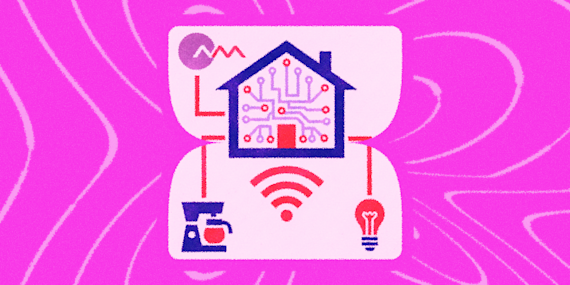
The most common complaint with Google Home Routines is that they don't connect devices from different ecosystems. IFTTT solves this, so you have the freedom to use all of your tools. For example, when a Ring camera detects motion at the front door, IFTTT can dim your Philips Hue lights inside and turn on the front porch light at the same time. When a sensor detects that a door has opened, IFTTT can trigger a sequence of actions to ensure you are safe, or simply be used to set up a more comfortable morning routine with your coffee machine (which isn't Google-branded, yet).
-
Turn on your Hue light when Ring detects motion at your door
 2.38k
2.38k
-
-
Turn on Home Connect Coffee Machine when you get out of bed
26
-




Location-based triggers
Google Home Routines don't use phone GPS. When your phone leaves a saved location, like your office or the gym, IFTTT can trigger your SmartLife thermostat to start adjusting before you arrive home. No manual adjustment needed, and you'll always come to home to the perfect temperature. The trigger is your actual location, which means the automation works no matter when you leave.



Weather and environment
When rain is forecast for the day, IFTTT can send a reminder through your Google Home speaker at a set time each morning. When outdoor temperature drops below a threshold, IFTTT can adjust connected devices. These environment-based automations go beyond what Google Home Routines handle natively and can be super helpful for planning your day effectively.


Calendar-connected smart homes
Your smart calendar already knows when you have focus time blocked off, and IFTTT can make your smart home work alongside it. When a calendar event labeled "Focus" starts, IFTTT can start changing your environment to create the ultimate focus zone, such as dimming lights and putting on music.
-
Set a Philips Hue scene when a Google Calendar event matches a keyword
-
-
Activate BeoLiving scene when work event starts on Google Calendar
-


Voice-triggered Applets
Through our Google Assistant integration, voice phrases spoken to any Google Home device can trigger any IFTTT Applet. Say "Hey Google, trigger movie mode" and IFTTT dims the Hue lights, activates a smart plug, and silences your phone. Yes, it's just as cool as it sounds.
-
Toggle Philips Hue lights with Google Assistant voice command
110
-
-
Turn on Tesla climate and blink Hue lights with Google Assistant
-


Building your perfect smart home
If you've used Google Home Routines in the past, you know they are a solid foundation for any smart home. But the best smart home automation setup is one that responds to what's happening no matter which device picks up on it. This could be motion at the door, your location, the weather, your calendar, all sorts of things that are crucial parts of your routine.
IFTTT boosts the functionality of Google Home into a more well-rounded tool, and our Google Assistant integration means your existing voice commands already work to trigger Applets. By combining the two platforms, you end up with a final product that is much more useful than either tool on it's own. The best part? Getting started only takes a couple of minutes, but we're sure you'll stick around to see just how much your smart home is capable of.
Browse IFTTT's Google Assistant Applets or create your free IFTTT account and activate your first automation today.
Other recommended services
The beauty of IFTTT is that we integrate with over 1000 apps and services, from big players like Google and Claude to more niche platforms so that you can be fully covered. Below are a couple of suggestions of similar services that you may like! Click on any of the bubbles to get started.





FAQ
Do I need a Google Nest device to use IFTTT with Google Home?
Nope. IFTTT connects to Google Assistant, which works across Google Home speakers, Nest devices, and the Google Assistant app on Android and iOS. As long as you have a Google Assistant-enabled device, you can use IFTTT voice-triggered Applets.
Is IFTTT free to use with Google Home?
Yes. IFTTT's free tier includes two single-step Applets, which covers most common smart home automations, like location, device control, weather-based actions, and more. Pro plans unlock multi-step Applets and a higher Applet limit for more complex setups.
Can IFTTT control devices that Google Home doesn't support?
Yes. IFTTT connects to 1,000+ services, including many smart home brands that don't have native Google Home integration. If your device hasn't yet been added as an IFTTT service, you can contact us to see if it's in the works!
Will IFTTT interfere with my existing Google Home Routines?
No. IFTTT and Google Home Routines run independently and don't conflict with each other. Many users run both simultaneously, with Routines handling native Google device stuff while IFTTT handles cross-ecosystem automations.
Create a free IFTTT account to connect the devices and services a Google Home Routine can't reach.