








Switch Smart Life heater to Heat Mode when Nest temperature drops
18 ready-made Google Nest Thermostat and Smart Life Applets
Turn one on, or build your own. Google Nest Thermostat can start an automation with "Humidity drops below", and IFTTT can then run "Activate Scene" on Smart Life.-
 3
3
-
-
Turn on Smart Life devices when Nest temperature rises above a set level
-
-
Turn off Smart Life device when Google Nest temperature rises above threshold
-
-
Activate Smart Life scene when Nest humidity drops below threshold
-
-
Turn on Smart Life device when Nest humidity drops below threshold
-
-
Turn on Smart Life device when Nest temperature drops below threshold
-
-
Turn off Smart Life device when Nest humidity rises above threshold
-
-
Turn off Smart Life device when Nest temperature falls below threshold
-
-
Turn off Smart Life scene when temperature falls below threshold
-

Automate Google Nest Thermostat and Smart Life from your AI assistant
Tell OpenClaw to create Nest Thermostat applets and control your temperature right from your AI assistant with IFTTT MCP.
Set up IFTTT MCP


Create your own Google Nest Thermostat and Smart Life workflow
Create custom workflows effortlessly by selecting triggers, queries, and actions. With IFTTT, it's simple: “If this” trigger happens, “then that” action follows. Streamline tasks and save time with automated workflows that work for you.
49 triggers, queries, and actions
Battery low
Polling trigger
Polling Applets run after IFTTT reaches out to the trigger service and finds a new trigger event. These trigger checks occur every 5 minutes for Pro and Pro+ users, and every hour for Free users.
This trigger fires when residual electricity in the lock under threshold.
Camera detects motion
Polling trigger
Polling Applets run after IFTTT reaches out to the trigger service and finds a new trigger event. These trigger checks occur every 5 minutes for Pro and Pro+ users, and every hour for Free users.
This trigger fires when the specified camera detects motion. To use this trigger, camera’s motion detection should be turned on.
Camera detects sound
Polling trigger
Polling Applets run after IFTTT reaches out to the trigger service and finds a new trigger event. These trigger checks occur every 5 minutes for Pro and Pro+ users, and every hour for Free users.
This trigger fires when the specified camera detects sound. To use this trigger, camera’s sound detection should be turned on.
Device or group is turned off
Polling trigger
Polling Applets run after IFTTT reaches out to the trigger service and finds a new trigger event. These trigger checks occur every 5 minutes for Pro and Pro+ users, and every hour for Free users.
This trigger fires when the specified device/group is turned off.
Device or group is turned on
Polling trigger
Polling Applets run after IFTTT reaches out to the trigger service and finds a new trigger event. These trigger checks occur every 5 minutes for Pro and Pro+ users, and every hour for Free users.
This trigger fires when the specified device/group is turned on.
Door sensor is closed
Polling trigger
Polling Applets run after IFTTT reaches out to the trigger service and finds a new trigger event. These trigger checks occur every 5 minutes for Pro and Pro+ users, and every hour for Free users.
This trigger fires when the door sensor is closed.
Door sensor is open
Polling trigger
Polling Applets run after IFTTT reaches out to the trigger service and finds a new trigger event. These trigger checks occur every 5 minutes for Pro and Pro+ users, and every hour for Free users.
This trigger fires when the door sensor is open.
Humidity drops below
Polling trigger
Polling Applets run after IFTTT reaches out to the trigger service and finds a new trigger event. These trigger checks occur every 5 minutes for Pro and Pro+ users, and every hour for Free users.
This trigger fires when the humidity drops below a given threshold.
Humidity rises above
Polling trigger
Polling Applets run after IFTTT reaches out to the trigger service and finds a new trigger event. These trigger checks occur every 5 minutes for Pro and Pro+ users, and every hour for Free users.
This trigger fires when the humidity rises above a given threshold.
Input incorrect password repetitiously
Polling trigger
Polling Applets run after IFTTT reaches out to the trigger service and finds a new trigger event. These trigger checks occur every 5 minutes for Pro and Pro+ users, and every hour for Free users.
This trigger fires when someone input incorrect password repetitiously.
Leak detected
Polling trigger
Polling Applets run after IFTTT reaches out to the trigger service and finds a new trigger event. These trigger checks occur every 5 minutes for Pro and Pro+ users, and every hour for Free users.
This trigger fires when water leak detected.
Person is detected
Polling trigger
Polling Applets run after IFTTT reaches out to the trigger service and finds a new trigger event. These trigger checks occur every 5 minutes for Pro and Pro+ users, and every hour for Free users.
This trigger fires when PIR detects person.
History of Camera detected sound

Query
A query lets your Applet retrieve extra data that isn't included in the trigger, so that your automation can include more complete or useful information.
This query returns a list of times when the specified camera detected sound. To use this query, camera’s sound detection must have been turned on.
History of Device turned off
Query
A query lets your Applet retrieve extra data that isn't included in the trigger, so that your automation can include more complete or useful information.
This query returns a list of times when the specified device/group was turned off.
History of Device was turned on
Query
A query lets your Applet retrieve extra data that isn't included in the trigger, so that your automation can include more complete or useful information.
This query returns a list of when the specified device/group was turned on.
History of Leak detected
Query
A query lets your Applet retrieve extra data that isn't included in the trigger, so that your automation can include more complete or useful information.
This query returns a list of times when the sensor detected a water leak.
History of low Battery alerts
Query
A query lets your Applet retrieve extra data that isn't included in the trigger, so that your automation can include more complete or useful information.
This query returns a list of when residual electricity in the lock dropped below the threshold. Note: this query will only return future events after this Applet is created.
History of motion detections by Camera
Query
A query lets your Applet retrieve extra data that isn't included in the trigger, so that your automation can include more complete or useful information.
This query returns a list of when a Camera detected motion. To use this query, Camera motion detected should be turned on.
History of repetitious incorrect password alerts
Query
A query lets your Applet retrieve extra data that isn't included in the trigger, so that your automation can include more complete or useful information.
This query returns a list of times when someone input an incorrect password repetitiously.
History of Shake detected
Query
A query lets your Applet retrieve extra data that isn't included in the trigger, so that your automation can include more complete or useful information.
This query returns a list of when sensor detected a shake
History of Sound or Light Detected
Query
A query lets your Applet retrieve extra data that isn't included in the trigger, so that your automation can include more complete or useful information.
This query returns a list of when water sound or light were detected.
History of when a Person was detected
Query
A query lets your Applet retrieve extra data that isn't included in the trigger, so that your automation can include more complete or useful information.
This query returns a list of when PIR detected person.
History of when Door sensor was closed
Query
A query lets your Applet retrieve extra data that isn't included in the trigger, so that your automation can include more complete or useful information.
This query returns a list of times when the door sensor was closed.
History of when Door sensor was open
Query
A query lets your Applet retrieve extra data that isn't included in the trigger, so that your automation can include more complete or useful information.
This query returns a list of times when the door sensor was open.
Activate Scene
Action
An action is the task your Applet carries out after the trigger occurs. It defines what happens as the result of your automation and completes the workflow.
This action will activate the specified scene.
Set AC temperature
Action
An action is the task your Applet carries out after the trigger occurs. It defines what happens as the result of your automation and completes the workflow.
This action will set your AC to a specified temperature by remote controller.
Set COOL temperature
Action
An action is the task your Applet carries out after the trigger occurs. It defines what happens as the result of your automation and completes the workflow.
This action will set the desired temperature in the COOL mode.
Set HOT temperature
Action
An action is the task your Applet carries out after the trigger occurs. It defines what happens as the result of your automation and completes the workflow.
This action will set the desired temperature in the HOT mode.
Set light brightness
Action
An action is the task your Applet carries out after the trigger occurs. It defines what happens as the result of your automation and completes the workflow.
This action will set your light to a specified brightness.
Set light color
Action
An action is the task your Applet carries out after the trigger occurs. It defines what happens as the result of your automation and completes the workflow.
This action will set the light to specified color.
Set temperature range
Action
An action is the task your Applet carries out after the trigger occurs. It defines what happens as the result of your automation and completes the workflow.
This action will set the desired temperature HEAT & COOL mode range.
Start Cool Mode
Action
An action is the task your Applet carries out after the trigger occurs. It defines what happens as the result of your automation and completes the workflow.
This action will set your AC to Cool Mode.
Start Heat Mode
Action
An action is the task your Applet carries out after the trigger occurs. It defines what happens as the result of your automation and completes the workflow.
This action will set your AC to Heat Mode.
Turn off
Action
An action is the task your Applet carries out after the trigger occurs. It defines what happens as the result of your automation and completes the workflow.
This action will turn off the device/group of your choosing.
Turn off Eco Mode
Action
An action is the task your Applet carries out after the trigger occurs. It defines what happens as the result of your automation and completes the workflow.
This action will turn off your thermostat's Eco Mode. When the Eco mode is turned off, the thermostat mode will default to the last standard mode (HEAT, COOL, HEATCOOL, or OFF) that was active.
Turn off fan
Action
An action is the task your Applet carries out after the trigger occurs. It defines what happens as the result of your automation and completes the workflow.
This action will turn off your thermostat's fan.
Activate Scene
Action
An action is the task your Applet carries out after the trigger occurs. It defines what happens as the result of your automation and completes the workflow.
This action will activate the specified scene.
Battery low
Polling trigger
Polling Applets run after IFTTT reaches out to the trigger service and finds a new trigger event. These trigger checks occur every 5 minutes for Pro and Pro+ users, and every hour for Free users.
This trigger fires when residual electricity in the lock under threshold.
Camera detects motion
Polling trigger
Polling Applets run after IFTTT reaches out to the trigger service and finds a new trigger event. These trigger checks occur every 5 minutes for Pro and Pro+ users, and every hour for Free users.
This trigger fires when the specified camera detects motion. To use this trigger, camera’s motion detection should be turned on.
Camera detects sound
Polling trigger
Polling Applets run after IFTTT reaches out to the trigger service and finds a new trigger event. These trigger checks occur every 5 minutes for Pro and Pro+ users, and every hour for Free users.
This trigger fires when the specified camera detects sound. To use this trigger, camera’s sound detection should be turned on.
Device or group is turned off
Polling trigger
Polling Applets run after IFTTT reaches out to the trigger service and finds a new trigger event. These trigger checks occur every 5 minutes for Pro and Pro+ users, and every hour for Free users.
This trigger fires when the specified device/group is turned off.
Device or group is turned on
Polling trigger
Polling Applets run after IFTTT reaches out to the trigger service and finds a new trigger event. These trigger checks occur every 5 minutes for Pro and Pro+ users, and every hour for Free users.
This trigger fires when the specified device/group is turned on.
Door sensor is closed
Polling trigger
Polling Applets run after IFTTT reaches out to the trigger service and finds a new trigger event. These trigger checks occur every 5 minutes for Pro and Pro+ users, and every hour for Free users.
This trigger fires when the door sensor is closed.
Door sensor is open
Polling trigger
Polling Applets run after IFTTT reaches out to the trigger service and finds a new trigger event. These trigger checks occur every 5 minutes for Pro and Pro+ users, and every hour for Free users.
This trigger fires when the door sensor is open.
History of Camera detected sound
Query
A query lets your Applet retrieve extra data that isn't included in the trigger, so that your automation can include more complete or useful information.
This query returns a list of times when the specified camera detected sound. To use this query, camera’s sound detection must have been turned on.
History of Device turned off
Query
A query lets your Applet retrieve extra data that isn't included in the trigger, so that your automation can include more complete or useful information.
This query returns a list of times when the specified device/group was turned off.
History of Device was turned on
Query
A query lets your Applet retrieve extra data that isn't included in the trigger, so that your automation can include more complete or useful information.
This query returns a list of when the specified device/group was turned on.
History of Leak detected
Query
A query lets your Applet retrieve extra data that isn't included in the trigger, so that your automation can include more complete or useful information.
This query returns a list of times when the sensor detected a water leak.
Build an automation in seconds!
If

Select a trigger the automation will use
Battery low
Camera detects motion
Camera detects sound
Device or group is turned off
Device or group is turned on
Door sensor is closed
Door sensor is open
 Humidity drops below
Humidity rises above
Input incorrect password repetitiously
Leak detected
Person is detected
Shake detected
Sound and light detected
Temperature drops below
Temperature rises above
Unlock the lock
Humidity drops below
Humidity rises above
Input incorrect password repetitiously
Leak detected
Person is detected
Shake detected
Sound and light detected
Temperature drops below
Temperature rises above
Unlock the lock
Then
Select an action the automation will perform
Activate Scene
Set AC temperature
Set COOL temperature
Set HOT temperature
Set light brightness
Set light color
Set temperature range
Start Cool Mode
Start Heat Mode
Turn off
Turn off Eco Mode
Turn off fan
Turn off oscillation function of fan
Turn on
Turn on Eco Mode
Turn on fan
Turn on oscillation function of fan
Turn thermostat off
Turn thermostat on
You can add delays, queries, and more actions in the chat.
GET STARTED
How to connect to a Google Nest Thermostat automation
Find an Applet using Google Nest Thermostat and Smart Life
Find an automation to connect to, or create your own!Connect IFTTT to your accounts
Securely connect the Applet services to your respective accounts.Finalize and customize your Applet
Review trigger and action settings, and click connect. Simple as that!Upgrade your automations with
-
Connect to more Applets
Connect up to 20 automations with Pro, and unlimited automations with Pro+ -
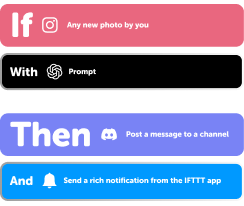
Add multiple actions with exclusive services
Add real-time data and multiple actions for smarter automations -
Get access to faster speeds
Get faster updates and more actions with higher rate limits and quicker checks
Google Nest Thermostat and Smart Life tips, tools, and resources
-
Productivity
10 automation prompts you need to try

-
Lifestyle
Automations for every kind of hobbyist

-
Smart home
IFTTT vs. Google Home Routines: the best smart home automation pair?
-
Smart home
How to get your bedroom ready the moment you get home
-
Smart home
How to build a gentle wake-up routine with smart lights and your thermostat
-
Lifestyle
How to automate your bedtime routine with smart lights, thermostat, and music
-
Smart home
The ultimate Airbnb smart home guide: best devices to automate your rental
-
Productivity
Automations for hosts of every kind
-
Smart home
Preventing Airbnb disasters: smart smoke, CO2 & water leak sensors
More on Google Nest Thermostat and Smart Life
About Google Nest Thermostat
Google Nest Thermostat and IFTTT let you automate your heating and cooling based on temperature and humidity, plus control your fan and Eco Mode.
About Smart Life
Smart Life and IFTTT let you automate your rental property's lights, locks, thermostats, and sensors so you catch problems like leaks and motion before they become headaches.